The first day and the first week: signatures, the file, training, hours
On the first day, before the employee starts work, a few papers are signed and a short training is given. Within the first week, a file is completed too. Which things are done on the first day and which in the first week, and what will putting in writing make easier for you later?
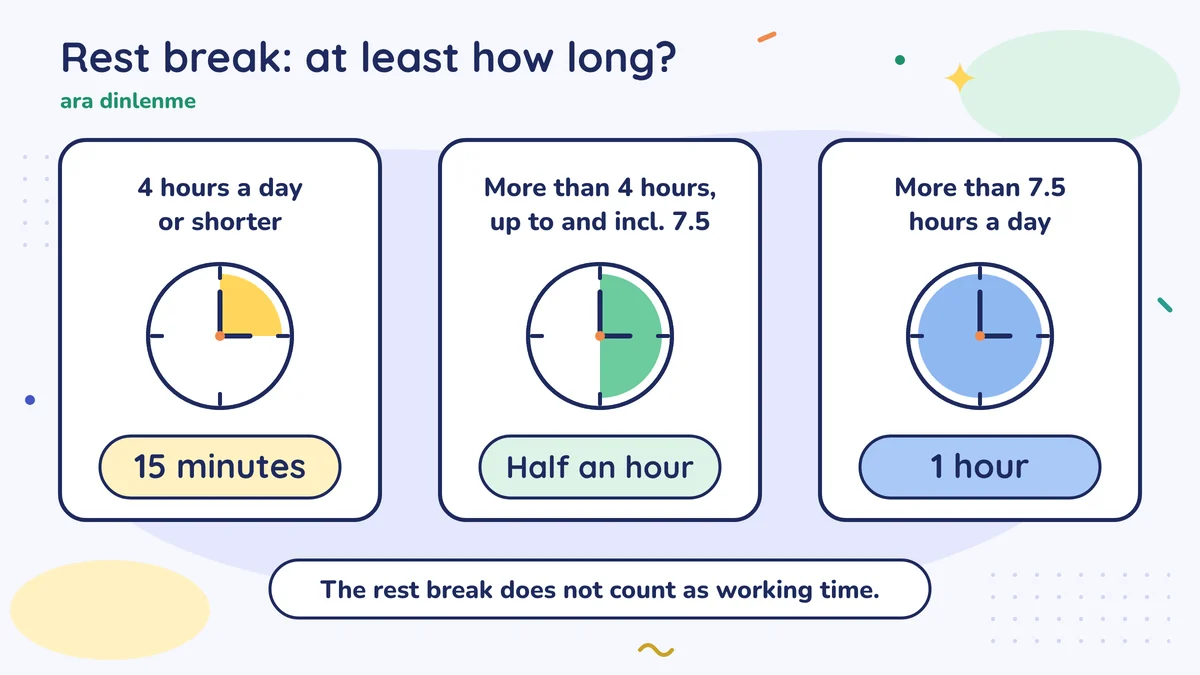
On the first day, before work starts, the contract is signed, the information notice about personal data is handed to the employee, and occupational health and safety training specific to their job is given. Within the first week, you complete the employee's personnel file (özlük dosyası). You also give the working days, the hours and the rest break in writing. Under the law, the rest break is at least 15 minutes, half an hour or one hour, depending on the daily working time.
Sevgi Hanım the tailor's first morning
Elçin is coming to Sevgi Hanım's tailoring workshop on Monday. The contract is ready, and the SGK (Social Security Institution) notification was given on Friday. Sevgi Hanım had planned Monday morning like this: Elçin arrives, they drink tea, then they start work. The specialist from the joint health and safety unit (OSGB) that provides occupational health and safety services to her workshop gave a warning: "There are a few things to do before she sits down at the machine."
Before cutting a new fabric, a tailor takes measurements, draws the pattern and pins it. Correcting it afterwards wastes the fabric. The first day is the same: if you complete a few papers at the start, you won't need to correct things later.

The first hour: three papers, one training
1. The employment contract. Sign the contract you prepared in advance before work starts. Make two copies, and one stays with the employee. We explained what to write in it in the employment contract lesson.
2. The information notice. You explain to the employee why you collect their identity, address, bank and health information. This is called informing them (aydınlatma) (Personal Data Protection Law (Kişisel Verilerin Korunması Kanunu), Law No. 6698, art. 10). Informing is not the same as getting the employee's consent. A signature showing you handed over the notice is the easiest way to show later that you fulfilled this duty.
3. Occupational health and safety training. Before actually starting work, the employee receives training on the risks specific to their job and workplace. This training counts as working time. In Sevgi Hanım's workshop the topics are clear: the machine needle, scissors, the iron, sockets. Keep the paper showing who gave the training, its date, its topic and the employee's signature. OSGBs usually provide a ready-made form for this.
Two things are added to these. The result of the medical examination on hiring goes into the file. In hazardous and very hazardous work, the employee is not allowed to start without a report showing they are fit for the job. The protective equipment the job requires is also given on the first day. The general framework of these duties is in the lesson A checklist before hiring. The OSGB tells you which hazard class the workshop is in and which examination is needed.
The first week: the personnel file
Under Labour Law (İş Kanunu) art. 75, the employer keeps a personnel file (özlük dosyası) for each employee. The identity details and the documents that must be drawn up under the law are kept in this file. Complete the file before the first week is over:
| Document | Where it comes from |
|---|---|
| Photocopy of ID, address, bank account | The employee |
| Signed employment contract | You and the employee |
| Signature for receipt of the information notice | You and the employee |
| Copy of the SGK employment start notification | Mali müşavir (accountant) |
| İSG (occupational health and safety) training record | The OSGB or whoever gave the training |
| Result of the medical examination on hiring | The workplace doctor or an authorised health institution |
| Diploma or certificate the job requires | The employee |
| Working arrangement note (see below) | You and the employee |
This file holds personal data. The Personal Data Protection Law (KVKK) also gives the employer the duty to take the necessary measures to protect the data it collects (art. 12). Documents such as a medical report are among the data that must be protected more strictly (art. 6). Keep the file in a locked cabinet or an encrypted folder. Not everyone who comes into the workshop should be able to open it and look.
Put the working hours in writing
The subject Sevgi Hanım and Elçin may argue about most in the future is hours: what time to arrive, what time to leave, how long the lunch break is? Writing this down from the start ties all these conversations to one piece of paper.
The general framework of the law:
- Working time is generally at most 45 hours a week (Labour Law art. 63).
- If the contract was not made in writing, the employer gives the employee, within two months, a written document that also shows the daily or weekly working time (art. 8). If the contract is in writing, you write the hours there anyway.
- The rest break (ara dinlenme) (art. 68) is at least the following, and it does not count as working time:
| Daily working time | Minimum rest break |
|---|---|
| 4 hours or shorter | 15 minutes |
| More than 4 hours, up to and including 7.5 hours | Half an hour |
| More than 7.5 hours | 1 hour |
Example: Elçin comes in at 09:00 and leaves at 18:00 five days a week, with a one-hour lunch break in between. She works 8 hours a day; since this is more than 7.5 hours, at least one hour of rest break is needed, and this arrangement meets it. The weekly total is 40 hours.
Prepare a one-page working arrangement note: the working days, the start and finish times, the time of the rest break, the weekly day off. You both sign it, and one copy goes into the personnel file. You can also put it up in a corner of the workshop. If overtime may be needed, the employee's written consent is also required; this is in the contract lesson too.
What to tell the employee on the first day
Talking matters as much as the papers. On the first day, tell the employee the answers to these questions yourself, so they don't need to ask later:
- On which day, and into which account, will the wage be paid?
- If they fall ill, who do they tell and how; how do they pass on their sick report?
- When asking for leave, who do they tell and how many days in advance?
- In an emergency, where is the exit, and where is the first aid cabinet?
Sevgi Hanım added these four items to the bottom of the working arrangement note. The only question Elçin asked in the first week was whose turn it was to brew the tea at lunchtime.
At the end of the first week
Set aside ten minutes on Friday evening. Ask the employee how it went, and check whether any document is missing. If you set a probation period, don't forget that it has started too. For the first wage that comes at the end of the first month, go on to the lesson The first payroll.
Sevgi Hanım drank her tea a little late that Monday. But when Elçin sat down at the machine, there was no paper missing from her file.
Do this this week
Prepare a one-page working arrangement note: the working days, the start and finish times, the time of the rest break, the weekly day off. Check in the table that the rest break fits the daily working time. Then sign it together with the employee.
Common mistakes
- Leaving the training for later with "they'll learn on the job". Occupational health and safety training is given before the employee actually starts work, and a record of it is kept.
- Having the information notice signed like a consent form. Informing means giving information. The signature taken from the employee shows that they received the notice.
- Leaving the hours verbal. If the start and finish times and the rest break are not in writing, you will have no document in hand in a dispute about overtime.
Sources
- Labour Law (İş Kanunu), Law No. 4857, art. 8, 63, 68, 75 (Ministry of Labour and Social Security PDF)
- Personal Data Protection Law (Kişisel Verilerin Korunması Kanunu), Law No. 6698, art. 10 and 12
- Occupational Health and Safety Law (İş Sağlığı ve Güvenliği Kanunu), Law No. 6331, art. 15 (health surveillance) and 17 (training)
- Ministry of Labour and Social Security: Occupational health and safety frequently asked questions
- Cott: Rest break times under the Labour Law (secondary source)
Translated from the Turkish lesson. Last checked against Turkish rules: 9 October 2026. Not yet reviewed by a licensed accountant.
This is general information about Turkish rules, not financial, tax or legal advice. Rules change; check the date and the sources, and ask a licensed accountant (mali müşavir) about your own situation. Disclaimer